
If you’re repairing or maintaining your car, you’ll quickly bump into the terms OE, OEM, and aftermarket. A lot of drivers don’t know the difference – and if you’re pulling parts yourself at a place like U-Pull-It, or browsing online for replacements, the line between them can feel even blurrier. Knowing what each term really means helps you pick the right part and avoid spending more than you need to.
OE (Original Equipment) parts are the exact components your car left the factory with. They’re built for that model, to that manufacturer’s specification. Every brand-new car is fitted entirely with OE parts from bumper to bumper.
OEM (Original Equipment Manufacturer) parts, on the other hand, are made by an authorised manufacturer once the car is on the road. They match the original specification, and in many cases they’re produced by the same company that made the OE version – just packaged differently.
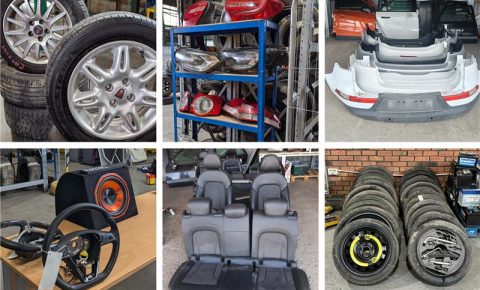
A common misconception is that dealerships only use OE parts. In reality, even the manufacturer’s own workshops often fit OEM replacements during routine repairs. And because OEM parts are widely available, local garages (and DIY mechanics) can source them easily. You’ll often find OEM parts in U-Pull-It yards too, especially on vehicles that were dealer-serviced before reaching us.
Being able to spot the difference on a car in the yard means you can sometimes walk away with a high-quality replacement part at a fraction of the brand-new price.
Aftermarket parts are third-party alternatives designed to replace OE or OEM components. You’ll see them everywhere: motor factors, online shops, and fitted by independent garages. They’re usually cheaper – although high-performance aftermarket components can end up costing more than the original.
At U-Pull-It, you’ll often find used OE and OEM alternators for far less than buying new, which is why many DIYers check the yard first before ordering a fresh aftermarket or OEM replacement.
Some of the biggest aftermarket brands include Bosch, Delphi, NGK, EBC Brakes, and Blueprint. The best aftermarket manufacturers don’t just copy the OE part – they reverse-engineer it, find weaknesses, and improve on the original design.
Think:
Recognising these brands when you’re pulling parts in the yard gives you a good sense of what’s worth grabbing.
Pros
Price
Aftermarket parts are usually cheaper than OEM, which is why insurers choose them for most repairs. If you’re repairing on a budget, it’s worth comparing the cost of a new aftermarket part with a used OE or OEM part from U-Pull-It. Depending on the part and its condition, the used option can work out cheaper – but it varies case by case.
Availability
Aftermarket parts are stocked everywhere and often available same-day. OEM parts sometimes have to be ordered in.
If you want something right now, a trip to U-Pull-It can often get you an OE or OEM component faster than waiting for a supplier to ship an OEM or even an aftermarket replacement.
Quality Options
The aftermarket world is huge. There are budget options, mid-range choices, and premium parts that outperform OE components. Many cars arrive at U-Pull-It already fitted with those premium upgrades – and when you know what to look for, you can grab excellent parts for a fraction of their new price.
Cons
Quality Variability
The big downside is inconsistency. Some aftermarket parts are excellent; others cut corners. When pulling aftermarket parts at U-Pull-It, it’s worth checking the condition and wear. For many DIY mechanics, the price difference makes that trade-off worth it.
Warranty Differences
OEM parts usually come with strong warranties. Aftermarket warranties vary massively — some are generous, others are basically nonexistent. Used OE or OEM parts from U-Pull-It won’t include a warranty either, so the choice often comes down to budget versus peace of mind.
So, OE parts are what your car originally came with. OEM parts are authorised replacements made to the same spec. Aftermarket parts range from affordable alternatives to upgraded versions designed to outperform the originals.
So which should you choose?
Whatever route you take, U-Pull-It gives you access to OE, OEM, and aftermarket components – all ready to inspect, remove, and fit on your own terms.
Find your next part at U-Pull-It today and keep your repair budget under control.
Increment bidding allows Copart to increase your entered bid by one and only one increment in the event your entered bid is tied by a live virtual bidder. If your bid is the highest bid, then your bid will NOT be incremented. Our increments are based on the following table:
| Bid Range £ | Increment £ |
|---|---|
| 0 – 10 | 1 |
| 10 – 50 | 5 |
| 50 – 100 | 10 |
| 100 – 1,000 | 25 |
| 1,000 – 5,000 | 50 |
| 5,000 – 25,000 | 100 |
| 25,000 – 9,940,000 | 250 |
| 9,940,000 – 9,999,999.99 | 1000 |
Example 1: You checked the increment bid box and bid £ 15,000. Live auction bid is currently at £ 15,000 (a tie with your bid – unfortunately, it happens). Your internet bid is placed next at £ 15,100 (because you checked the increment bid box). The car sells to you at no more than £ 15,100 or to live auction bidder for £ 15,200 or more.
| Cookie | Duration | Description |
|---|---|---|
| __cf_bm | 1 hour | This cookie, set by Cloudflare, is used to support Cloudflare Bot Management. |
| cookielawinfo-checkbox-advertisement | 1 year | Set by the GDPR Cookie Consent plugin, this cookie records the user consent for the cookies in the "Advertisement" category. |
| cookielawinfo-checkbox-analytics | 11 months | This cookie is set by GDPR Cookie Consent plugin. The cookie is used to store the user consent for the cookies in the category "Analytics". |
| cookielawinfo-checkbox-functional | 11 months | The cookie is set by GDPR cookie consent to record the user consent for the cookies in the category "Functional". |
| cookielawinfo-checkbox-necessary | 11 months | This cookie is set by GDPR Cookie Consent plugin. The cookies is used to store the user consent for the cookies in the category "Necessary". |
| cookielawinfo-checkbox-others | 11 months | This cookie is set by GDPR Cookie Consent plugin. The cookie is used to store the user consent for the cookies in the category "Other. |
| cookielawinfo-checkbox-performance | 11 months | This cookie is set by GDPR Cookie Consent plugin. The cookie is used to store the user consent for the cookies in the category "Performance". |
| CookieLawInfoConsent | 1 year | CookieYes sets this cookie to record the default button state of the corresponding category and the status of CCPA. It works only in coordination with the primary cookie. |
| elementor | never | The website's WordPress theme uses this cookie. It allows the website owner to implement or change the website's content in real-time. |
| incap_ses_* | session | This is an Incapsula DDoS Protection and Web Application Firewall cookie that is used to relate HTTP requests to a certain session. |
| PHPSESSID | session | This cookie is native to PHP applications. The cookie stores and identifies a user's unique session ID to manage user sessions on the website. The cookie is a session cookie and will be deleted when all the browser windows are closed. |
| viewed_cookie_policy | 11 months | The cookie is set by the GDPR Cookie Consent plugin and is used to store whether or not user has consented to the use of cookies. It does not store any personal data. |
| visid_incap_* | 1 year | Incapsula sets this cookie to provide cloud-based website security services. |
| Cookie | Duration | Description |
|---|---|---|
| mailchimp_landing_site | 1 month | MailChimp sets the cookie to record which page the user first visited. |
| Cookie | Duration | Description |
|---|---|---|
| ___utmvc | less than a minute | The ___utmvc cookie is installed by Google Analytics to gather data on the user's site usage. This data is then used to compile reports and improve the site. |
| _ga | 1 year 1 month 4 days | Google Analytics sets this cookie to calculate visitor, session and campaign data and track site usage for the site's analytics report. The cookie stores information anonymously and assigns a randomly generated number to recognise unique visitors. |
| _ga_* | 1 year 1 month 4 days | Google Analytics sets this cookie to store and count page views. |
| _gat_gtag_UA_* | 1 minute | Google Analytics sets this cookie to store a unique user ID. |
| _gid | 1 day | Google Analytics sets this cookie to store information on how visitors use a website while also creating an analytics report of the website's performance. Some of the collected data includes the number of visitors, their source, and the pages they visit anonymously. |
| _hjSession_* | 1 hour | Hotjar sets this cookie to ensure data from subsequent visits to the same site is attributed to the same user ID, which persists in the Hotjar User ID, which is unique to that site. |
| _hjSessionUser_* | 1 year | Hotjar sets this cookie to ensure data from subsequent visits to the same site is attributed to the same user ID, which persists in the Hotjar User ID, which is unique to that site. |
| sbjs_current | session | Sourcebuster sets this cookie to identify the source of a visit and stores user action information in cookies. This analytical and behavioural cookie is used to enhance the visitor experience on the website. |
| sbjs_current_add | session | Sourcebuster sets this cookie to identify the source of a visit and stores user action information in cookies. This analytical and behavioural cookie is used to enhance the visitor experience on the website. |
| sbjs_first | session | Sourcebuster sets this cookie to identify the source of a visit and stores user action information in cookies. This analytical and behavioural cookie is used to enhance the visitor experience on the website. |
| sbjs_first_add | session | Sourcebuster sets this cookie to identify the source of a visit and stores user action information in cookies. This analytical and behavioural cookie is used to enhance the visitor experience on the website. |
| sbjs_migrations | session | Sourcebuster sets this cookie to identify the source of a visit and stores user action information in cookies. This analytical and behavioural cookie is used to enhance the visitor experience on the website. |
| sbjs_session | 1 hour | Sourcebuster sets this cookie to identify the source of a visit and stores user action information in cookies. This analytical and behavioural cookie is used to enhance the visitor experience on the website. |
| sbjs_udata | session | Sourcebuster sets this cookie to identify the source of a visit and stores user action information in cookies. This analytical and behavioural cookie is used to enhance the visitor experience on the website. |
| vuid | 1 year 1 month 4 days | Vimeo installs this cookie to collect tracking information by setting a unique ID to embed videos on the website. |
| Cookie | Duration | Description |
|---|---|---|
| _fbp | 3 months | Facebook sets this cookie to display advertisements when either on Facebook or on a digital platform powered by Facebook advertising after visiting the website. |
| test_cookie | 15 minutes | doubleclick.net sets this cookie to determine if the user's browser supports cookies. |
| VISITOR_INFO1_LIVE | 6 months | YouTube sets this cookie to measure bandwidth, determining whether the user gets the new or old player interface. |
| VISITOR_PRIVACY_METADATA | 6 months | YouTube sets this cookie to store the user's cookie consent state for the current domain. |
| YSC | session | Youtube sets this cookie to track the views of embedded videos on Youtube pages. |
| yt-remote-connected-devices | never | YouTube sets this cookie to store the user's video preferences using embedded YouTube videos. |
| yt-remote-device-id | never | YouTube sets this cookie to store the user's video preferences using embedded YouTube videos. |
| yt.innertube::nextId | never | YouTube sets this cookie to register a unique ID to store data on what videos from YouTube the user has seen. |
| yt.innertube::requests | never | YouTube sets this cookie to register a unique ID to store data on what videos from YouTube the user has seen. |
| Cookie | Duration | Description |
|---|---|---|
| cookies.js | session | No description available. |
| elementor_split_test_client_id | 1 year | No description available. |