
A car horn is one of those parts you barely notice until it stops working. But when you need it, you need it straight away.
The good news is that replacing a car horn is often a manageable job. On many cars, the horn sits behind the front bumper or grille, so if you can reach it safely and have a few basic tools, it may be possible to change it yourself.
This guide explains how to change a car horn, what to check before you start, and when it may be better to get help.
A car horn is a simple but important safety feature. It lets you warn other road users or pedestrians if needed, especially in situations where a quick sound can help prevent a problem. In fact, it’s so important, that a working horn is required for roadworthiness and is checked during the MOT.
A horn does not always fail suddenly. Sometimes it starts to sound quieter than normal, or the tone becomes weak or distorted. In other cases, it may only work some of the time. You might also hear a clicking sound when you press the horn, but get no actual sound from the front of the car.
That said, the horn itself is not always the cause. Before replacing it, it is worth checking whether the problem could be something simpler.
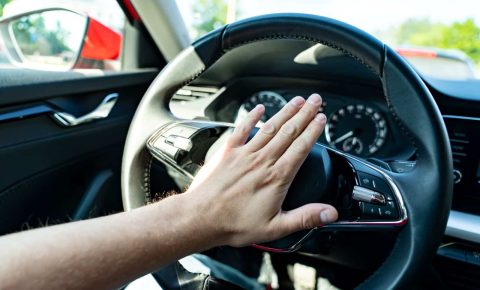
If your horn has stopped working, the fault could be the horn unit, but it could also be a fuse, relay, damaged wire, or a poor electrical connection. In some cases, the issue may even come from the horn switch in the steering wheel.
That is why it makes sense to do a few basic checks first. Your owner’s manual should help you find the correct fuse and relay. If a fuse has blown, replacing the horn alone will not solve the problem. The same goes for damaged wiring or a bad connection.
If you are not sure where the fault is, it is usually better to diagnose it first rather than buying a replacement part too early.
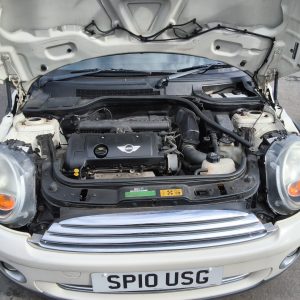
If you are wondering where the horn is on a car, it is often fitted at the front of the vehicle. On many models, it sits behind the front grille, behind the bumper, or low down near the radiator support.
Some vehicles have a single horn, while others use two horns together to create a fuller sound. The exact location depends on the make and model. On some cars, the horn is easy to reach from under the bonnet. On others, access can be tighter and may involve removing trim clips, wheel arch liners, or part of the front bumper.
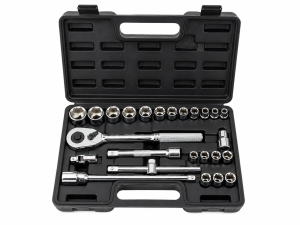
In many cases, you will only need a few basic tools, such as a socket set, spanners, screwdrivers, gloves, and a torch. Some cars may also need a trim removal tool if covers or clips are in the way. If access is from underneath, you may need to raise the car safely using proper support.
You will also need a replacement car horn that matches your vehicle. The connector, bracket, voltage, and general fitment all need to be right. It is also worth checking whether your car uses one horn or a pair before you buy anything.
If you want to see more like this, check out our car maintenance series:
Although the exact process varies from one vehicle to another, the steps are usually quite similar.
Start by parking the car on level ground, switching the engine off, and applying the handbrake. If you are working near electrical connections, disconnecting the negative battery terminal is a sensible safety step. Bear in mind however, that disconnecting your battery may cause some systems to lose stored settings, so it’s worth checking your owner’s manual first, just so you don’t have any nasty surprises.
Next, locate the horn. You may be able to see it by opening the bonnet and looking towards the front of the car. If not, you may need to look through the grille or from underneath the front bumper. Once you have found it, check what is blocking access. Sometimes there is nothing in the way. In other cases, you may need to remove a plastic cover, loosen an undertray, or take out a few trim clips.
When you can reach the horn properly, disconnect the electrical plug. If it feels stiff, don’t pull too hard. Look for a release tab and ease it off carefully. While you are there, check the connector for corrosion, dirt, or obvious damage.
The horn is usually mounted on a bracket with one or two bolts. Undo these, remove the old horn, and keep the bracket if the new horn uses the same fitting. Then position the replacement horn in the same place, secure it properly, and reconnect the wiring plug.
Before putting any trim back on, reconnect the battery if needed and test the horn. If it sounds clear and works consistently, you can refit anything you removed. If it still does not work, the problem may be elsewhere, such as the fuse, relay, or wiring.
If the horn is easy to access and you are comfortable with basic tools, it can be a reasonable job to do at home.
The main difficulty is often not the horn itself, but getting to it. Some cars have very tight access, and it is easy to damage clips or trim if you rush. So while it can be a straightforward repair, there is no harm in getting help if access is awkward or the fault is not clear.
A lot of drivers put this job off because they assume it is more complicated than it really is. One common worry is replacing the horn and finding that it still does not work. That can happen if the actual problem is a blown fuse, bad relay, broken wire, or an issue with the horn switch. That is why those early checks matter.
Another concern is tools. In most cases, you will not need anything unusual, but some vehicles do make access harder than others. And while changing a horn is often not a major repair, the time involved can vary depending on where it is fitted.
Some people also wonder whether a used horn is worth considering. It can be a practical option, especially for an older vehicle, as long as it matches properly and is in good condition.
Before buying a replacement, check your car’s make, model, and year. It is also worth confirming whether your vehicle uses one horn or two, and whether the connector and mounting bracket match the original part.
Even if a part is listed as suitable, it helps to compare it with the old horn before fitting it. A quick visual check can save time and frustration later.
If you have done this sort of job before, the main thing is to confirm the fault before ordering parts. Make sure the horn is actually the issue, then check access, connector type, and bracket position. If your car uses a two-horn setup and one has already failed, it may be worth looking at both while you have access.
It is also a good idea to test everything before refitting bumper trim, liners, or covers.
U-Pull-It can help you find used parts for your vehicle at a lower cost than buying new. Check the details before you travel so you know the part is right for your car.
Increment bidding allows Copart to increase your entered bid by one and only one increment in the event your entered bid is tied by a live virtual bidder. If your bid is the highest bid, then your bid will NOT be incremented. Our increments are based on the following table:
| Bid Range £ | Increment £ |
|---|---|
| 0 – 10 | 1 |
| 10 – 50 | 5 |
| 50 – 100 | 10 |
| 100 – 1,000 | 25 |
| 1,000 – 5,000 | 50 |
| 5,000 – 25,000 | 100 |
| 25,000 – 9,940,000 | 250 |
| 9,940,000 – 9,999,999.99 | 1000 |
Example 1: You checked the increment bid box and bid £ 15,000. Live auction bid is currently at £ 15,000 (a tie with your bid – unfortunately, it happens). Your internet bid is placed next at £ 15,100 (because you checked the increment bid box). The car sells to you at no more than £ 15,100 or to live auction bidder for £ 15,200 or more.
| Cookie | Duration | Description |
|---|---|---|
| __cf_bm | 1 hour | This cookie, set by Cloudflare, is used to support Cloudflare Bot Management. |
| cookielawinfo-checkbox-advertisement | 1 year | Set by the GDPR Cookie Consent plugin, this cookie records the user consent for the cookies in the "Advertisement" category. |
| cookielawinfo-checkbox-analytics | 11 months | This cookie is set by GDPR Cookie Consent plugin. The cookie is used to store the user consent for the cookies in the category "Analytics". |
| cookielawinfo-checkbox-functional | 11 months | The cookie is set by GDPR cookie consent to record the user consent for the cookies in the category "Functional". |
| cookielawinfo-checkbox-necessary | 11 months | This cookie is set by GDPR Cookie Consent plugin. The cookies is used to store the user consent for the cookies in the category "Necessary". |
| cookielawinfo-checkbox-others | 11 months | This cookie is set by GDPR Cookie Consent plugin. The cookie is used to store the user consent for the cookies in the category "Other. |
| cookielawinfo-checkbox-performance | 11 months | This cookie is set by GDPR Cookie Consent plugin. The cookie is used to store the user consent for the cookies in the category "Performance". |
| CookieLawInfoConsent | 1 year | CookieYes sets this cookie to record the default button state of the corresponding category and the status of CCPA. It works only in coordination with the primary cookie. |
| elementor | never | The website's WordPress theme uses this cookie. It allows the website owner to implement or change the website's content in real-time. |
| incap_ses_* | session | This is an Incapsula DDoS Protection and Web Application Firewall cookie that is used to relate HTTP requests to a certain session. |
| PHPSESSID | session | This cookie is native to PHP applications. The cookie stores and identifies a user's unique session ID to manage user sessions on the website. The cookie is a session cookie and will be deleted when all the browser windows are closed. |
| viewed_cookie_policy | 11 months | The cookie is set by the GDPR Cookie Consent plugin and is used to store whether or not user has consented to the use of cookies. It does not store any personal data. |
| visid_incap_* | 1 year | Incapsula sets this cookie to provide cloud-based website security services. |
| Cookie | Duration | Description |
|---|---|---|
| mailchimp_landing_site | 1 month | MailChimp sets the cookie to record which page the user first visited. |
| Cookie | Duration | Description |
|---|---|---|
| ___utmvc | less than a minute | The ___utmvc cookie is installed by Google Analytics to gather data on the user's site usage. This data is then used to compile reports and improve the site. |
| _ga | 1 year 1 month 4 days | Google Analytics sets this cookie to calculate visitor, session and campaign data and track site usage for the site's analytics report. The cookie stores information anonymously and assigns a randomly generated number to recognise unique visitors. |
| _ga_* | 1 year 1 month 4 days | Google Analytics sets this cookie to store and count page views. |
| _gat_gtag_UA_* | 1 minute | Google Analytics sets this cookie to store a unique user ID. |
| _gid | 1 day | Google Analytics sets this cookie to store information on how visitors use a website while also creating an analytics report of the website's performance. Some of the collected data includes the number of visitors, their source, and the pages they visit anonymously. |
| _hjSession_* | 1 hour | Hotjar sets this cookie to ensure data from subsequent visits to the same site is attributed to the same user ID, which persists in the Hotjar User ID, which is unique to that site. |
| _hjSessionUser_* | 1 year | Hotjar sets this cookie to ensure data from subsequent visits to the same site is attributed to the same user ID, which persists in the Hotjar User ID, which is unique to that site. |
| sbjs_current | session | Sourcebuster sets this cookie to identify the source of a visit and stores user action information in cookies. This analytical and behavioural cookie is used to enhance the visitor experience on the website. |
| sbjs_current_add | session | Sourcebuster sets this cookie to identify the source of a visit and stores user action information in cookies. This analytical and behavioural cookie is used to enhance the visitor experience on the website. |
| sbjs_first | session | Sourcebuster sets this cookie to identify the source of a visit and stores user action information in cookies. This analytical and behavioural cookie is used to enhance the visitor experience on the website. |
| sbjs_first_add | session | Sourcebuster sets this cookie to identify the source of a visit and stores user action information in cookies. This analytical and behavioural cookie is used to enhance the visitor experience on the website. |
| sbjs_migrations | session | Sourcebuster sets this cookie to identify the source of a visit and stores user action information in cookies. This analytical and behavioural cookie is used to enhance the visitor experience on the website. |
| sbjs_session | 1 hour | Sourcebuster sets this cookie to identify the source of a visit and stores user action information in cookies. This analytical and behavioural cookie is used to enhance the visitor experience on the website. |
| sbjs_udata | session | Sourcebuster sets this cookie to identify the source of a visit and stores user action information in cookies. This analytical and behavioural cookie is used to enhance the visitor experience on the website. |
| vuid | 1 year 1 month 4 days | Vimeo installs this cookie to collect tracking information by setting a unique ID to embed videos on the website. |
| Cookie | Duration | Description |
|---|---|---|
| _fbp | 3 months | Facebook sets this cookie to display advertisements when either on Facebook or on a digital platform powered by Facebook advertising after visiting the website. |
| test_cookie | 15 minutes | doubleclick.net sets this cookie to determine if the user's browser supports cookies. |
| VISITOR_INFO1_LIVE | 6 months | YouTube sets this cookie to measure bandwidth, determining whether the user gets the new or old player interface. |
| VISITOR_PRIVACY_METADATA | 6 months | YouTube sets this cookie to store the user's cookie consent state for the current domain. |
| YSC | session | Youtube sets this cookie to track the views of embedded videos on Youtube pages. |
| yt-remote-connected-devices | never | YouTube sets this cookie to store the user's video preferences using embedded YouTube videos. |
| yt-remote-device-id | never | YouTube sets this cookie to store the user's video preferences using embedded YouTube videos. |
| yt.innertube::nextId | never | YouTube sets this cookie to register a unique ID to store data on what videos from YouTube the user has seen. |
| yt.innertube::requests | never | YouTube sets this cookie to register a unique ID to store data on what videos from YouTube the user has seen. |
| Cookie | Duration | Description |
|---|---|---|
| cookies.js | session | No description available. |
| elementor_split_test_client_id | 1 year | No description available. |