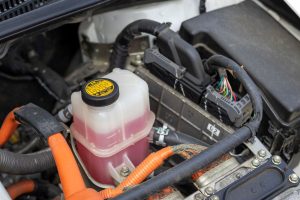

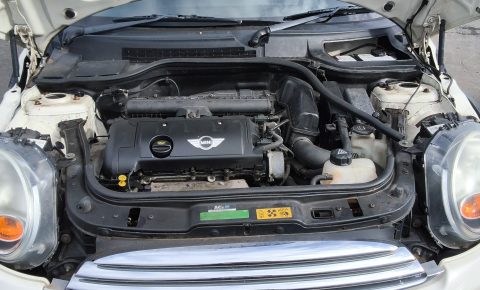
Finding another Mini Cooper as a donor car when you own a Mini Cooper is a good start. But it doesn’t mean the part you need will automatically fit.
The same model can use different components depending on its generation, body style, engine, production date and equipment. Two parts can even look identical until you compare the mountings or electrical connections.
So, if you’ve spotted your make and model in U-Pull-It stock, treat the donor car as a possibility rather than a confirmed match. A few checks before you travel can tell you much more.
A part can look right without being the right part
For a used component to be a useful replacement, there are two bigger questions beyond whether it looks like yours: will it physically fit, and will it work as it should?
Take a complete wing mirror. Two mirrors from the same model might share the same shape and mounting arrangement, but one could have heated glass and electric adjustment while another also power-folds or contains an indicator, camera or blind-spot equipment. Their electrical connections can differ as a result.
A visual match is useful evidence, but it isn’t enough on its own.
Check the part on your own car first
Your existing component gives you something definite to compare with the donor part.
Start by establishing exactly what you need. If a mirror has been damaged, do you need the glass, outer cover or complete mirror assembly? If a lamp is damaged, are you replacing the complete unit or only one part of it?
Where you can check safely, take clear photos of the component before you travel. Useful details can include:
Photograph details rather than relying on memory. A connector that seemed obvious on your driveway can be surprisingly difficult to picture accurately when you’re standing beside a donor car later.
If you can find a part number, use it
An OE or OEM part number is a reference used to identify the original component. If you can find a legible reference on your existing part, it can provide much stronger evidence than appearance alone.
Don’t assume that two references must be identical. Manufacturers can replace or supersede part numbers during a vehicle’s life.
If the numbers differ, use reliable manufacturer or parts information to establish whether the references correspond rather than assuming an automatic yes or no.
Same model doesn’t necessarily mean the same version
“Ford Focus” or “Vauxhall Corsa” describes a family of cars produced over many years. For compatibility, the trick is to identify which differences matter to the particular part you’re looking for.
Check the generation and facelift
A new generation is a major redesign. A facelift is an update during a generation’s production run. Either can bring changes to individual components while the model name stays the same.
Ford’s current parts listings show how specific compatibility can become. One upper grille is listed for Focus models from September 2014 to March 2018, but excludes ST, ST-Line and RS versions.
That doesn’t mean every Focus part changed at those dates. It shows why “it’s from another Focus” isn’t enough to confirm a particular component will fit.
Check body style when the part makes it relevant
A hatchback and estate can share plenty of components but differ elsewhere. Three-door and five-door versions can also use different body parts.
You don’t need to match body style for the sake of it. Ask whether it affects the component you need.
Check the engine when the part depends on it
The exact engine can be crucial for an engine-related component but irrelevant to a piece of interior trim.
You don’t need every detail about the donor vehicle. You need the details that affect your part.
Don’t overlook factory equipment
Electrical parts are where specification differences can be particularly easy to miss.
If your wing mirror has electric adjustment, heating and power folding, for example, a mirror that merely looks the same isn’t enough. You need to establish whether the donor unit has the functions and connections your car requires.
The better question is not “is this the same car?” but “is this the same version of the part?”
Build confidence from more than one clue
There’s no single compatibility check that works for every car part. Think of the evidence becoming stronger as you learn more.
The same model is a starting point. Matching the generation and the body style, specification or equipment relevant to the component gives you more confidence. Comparing the mountings, electrical connections, functions and part references where appropriate takes the check further.
You won’t need every check for every component. A piece of interior trim and an electrically folding mirror don’t present the same compatibility problem.
Found a possible donor in U-Pull-It stock? Prepare before you travel
U-Pull-It’s stock search lets you look for potential donor vehicles at its breakers yards. Use the vehicle details shown in the listing to compare promising donors with your own car before making the journey.
A vehicle appearing in stock doesn’t confirm that the component will fit your car or that the part will still be present when you arrive.
Take your photos, relevant vehicle details, any useful component reference and pictures of connectors or mountings where you could inspect them safely.
If it’s your first visit, U-Pull-It’s first-time breakers-yard guidance covers the practical side of preparing for the yard.
Compare the donor part before you start removing it
Once you’re beside the donor vehicle, use the information you’ve brought with you rather than relying on recognition.
Depending on the component, compare:
For a wing mirror, “same shape and colour” is only part of the check. Compare its equipment and connections with your original too.
This is particularly relevant at U-Pull-It because Breaker Parts customers remove permitted components from donor vehicles themselves. Check the part before putting time into removing it.
Some parts need more than a visual comparison
Some electronic parts can depend on vehicle-specific configuration, programming or calibration. Physically fitting into the same space doesn’t prove that a component will communicate with the car or work correctly.
Safety-critical systems need more caution. Airbags and other SRS components, braking and steering systems, high-voltage EV equipment and parts affecting driver-assistance systems aren’t areas to rely on “it looks the same”.
If you can’t establish compatibility from appropriate technical information, or fitting requires specialist programming, calibration or safety knowledge, get professional advice rather than guessing.
Before you remove it, ask one last question
You don’t need the whole donor car to be identical to yours. You need to account for the differences that matter to the component you’re taking.
Is it the right vehicle version? → Have I checked the specification that matters to this part? → Do the reference, mountings, connections and functions correspond where relevant? → Is there anything involving coding, calibration or safety that I haven’t resolved?
Finding your make and model gets you to a possible donor. These checks help you decide whether the component is worth removing.
Once you know what details matter, search U-Pull-It stock for potential donor vehicles and take that information with you when you visit.
Increment bidding allows Copart to increase your entered bid by one and only one increment in the event your entered bid is tied by a live virtual bidder. If your bid is the highest bid, then your bid will NOT be incremented. Our increments are based on the following table:
| Bid Range £ | Increment £ |
|---|---|
| 0 – 10 | 1 |
| 10 – 50 | 5 |
| 50 – 100 | 10 |
| 100 – 1,000 | 25 |
| 1,000 – 5,000 | 50 |
| 5,000 – 25,000 | 100 |
| 25,000 – 9,940,000 | 250 |
| 9,940,000 – 9,999,999.99 | 1000 |
Example 1: You checked the increment bid box and bid £ 15,000. Live auction bid is currently at £ 15,000 (a tie with your bid – unfortunately, it happens). Your internet bid is placed next at £ 15,100 (because you checked the increment bid box). The car sells to you at no more than £ 15,100 or to live auction bidder for £ 15,200 or more.
| Cookie | Duration | Description |
|---|---|---|
| __cf_bm | 1 hour | This cookie, set by Cloudflare, is used to support Cloudflare Bot Management. |
| cookielawinfo-checkbox-advertisement | 1 year | Set by the GDPR Cookie Consent plugin, this cookie records the user consent for the cookies in the "Advertisement" category. |
| cookielawinfo-checkbox-analytics | 11 months | This cookie is set by GDPR Cookie Consent plugin. The cookie is used to store the user consent for the cookies in the category "Analytics". |
| cookielawinfo-checkbox-functional | 11 months | The cookie is set by GDPR cookie consent to record the user consent for the cookies in the category "Functional". |
| cookielawinfo-checkbox-necessary | 11 months | This cookie is set by GDPR Cookie Consent plugin. The cookies is used to store the user consent for the cookies in the category "Necessary". |
| cookielawinfo-checkbox-others | 11 months | This cookie is set by GDPR Cookie Consent plugin. The cookie is used to store the user consent for the cookies in the category "Other. |
| cookielawinfo-checkbox-performance | 11 months | This cookie is set by GDPR Cookie Consent plugin. The cookie is used to store the user consent for the cookies in the category "Performance". |
| CookieLawInfoConsent | 1 year | CookieYes sets this cookie to record the default button state of the corresponding category and the status of CCPA. It works only in coordination with the primary cookie. |
| elementor | never | The website's WordPress theme uses this cookie. It allows the website owner to implement or change the website's content in real-time. |
| incap_ses_* | session | This is an Incapsula DDoS Protection and Web Application Firewall cookie that is used to relate HTTP requests to a certain session. |
| PHPSESSID | session | This cookie is native to PHP applications. The cookie stores and identifies a user's unique session ID to manage user sessions on the website. The cookie is a session cookie and will be deleted when all the browser windows are closed. |
| viewed_cookie_policy | 11 months | The cookie is set by the GDPR Cookie Consent plugin and is used to store whether or not user has consented to the use of cookies. It does not store any personal data. |
| visid_incap_* | 1 year | Incapsula sets this cookie to provide cloud-based website security services. |
| Cookie | Duration | Description |
|---|---|---|
| mailchimp_landing_site | 1 month | MailChimp sets the cookie to record which page the user first visited. |
| Cookie | Duration | Description |
|---|---|---|
| ___utmvc | less than a minute | The ___utmvc cookie is installed by Google Analytics to gather data on the user's site usage. This data is then used to compile reports and improve the site. |
| _ga | 1 year 1 month 4 days | Google Analytics sets this cookie to calculate visitor, session and campaign data and track site usage for the site's analytics report. The cookie stores information anonymously and assigns a randomly generated number to recognise unique visitors. |
| _ga_* | 1 year 1 month 4 days | Google Analytics sets this cookie to store and count page views. |
| _gat_gtag_UA_* | 1 minute | Google Analytics sets this cookie to store a unique user ID. |
| _gid | 1 day | Google Analytics sets this cookie to store information on how visitors use a website while also creating an analytics report of the website's performance. Some of the collected data includes the number of visitors, their source, and the pages they visit anonymously. |
| _hjSession_* | 1 hour | Hotjar sets this cookie to ensure data from subsequent visits to the same site is attributed to the same user ID, which persists in the Hotjar User ID, which is unique to that site. |
| _hjSessionUser_* | 1 year | Hotjar sets this cookie to ensure data from subsequent visits to the same site is attributed to the same user ID, which persists in the Hotjar User ID, which is unique to that site. |
| sbjs_current | session | Sourcebuster sets this cookie to identify the source of a visit and stores user action information in cookies. This analytical and behavioural cookie is used to enhance the visitor experience on the website. |
| sbjs_current_add | session | Sourcebuster sets this cookie to identify the source of a visit and stores user action information in cookies. This analytical and behavioural cookie is used to enhance the visitor experience on the website. |
| sbjs_first | session | Sourcebuster sets this cookie to identify the source of a visit and stores user action information in cookies. This analytical and behavioural cookie is used to enhance the visitor experience on the website. |
| sbjs_first_add | session | Sourcebuster sets this cookie to identify the source of a visit and stores user action information in cookies. This analytical and behavioural cookie is used to enhance the visitor experience on the website. |
| sbjs_migrations | session | Sourcebuster sets this cookie to identify the source of a visit and stores user action information in cookies. This analytical and behavioural cookie is used to enhance the visitor experience on the website. |
| sbjs_session | 1 hour | Sourcebuster sets this cookie to identify the source of a visit and stores user action information in cookies. This analytical and behavioural cookie is used to enhance the visitor experience on the website. |
| sbjs_udata | session | Sourcebuster sets this cookie to identify the source of a visit and stores user action information in cookies. This analytical and behavioural cookie is used to enhance the visitor experience on the website. |
| vuid | 1 year 1 month 4 days | Vimeo installs this cookie to collect tracking information by setting a unique ID to embed videos on the website. |
| Cookie | Duration | Description |
|---|---|---|
| _fbp | 3 months | Facebook sets this cookie to display advertisements when either on Facebook or on a digital platform powered by Facebook advertising after visiting the website. |
| test_cookie | 15 minutes | doubleclick.net sets this cookie to determine if the user's browser supports cookies. |
| VISITOR_INFO1_LIVE | 6 months | YouTube sets this cookie to measure bandwidth, determining whether the user gets the new or old player interface. |
| VISITOR_PRIVACY_METADATA | 6 months | YouTube sets this cookie to store the user's cookie consent state for the current domain. |
| YSC | session | Youtube sets this cookie to track the views of embedded videos on Youtube pages. |
| yt-remote-connected-devices | never | YouTube sets this cookie to store the user's video preferences using embedded YouTube videos. |
| yt-remote-device-id | never | YouTube sets this cookie to store the user's video preferences using embedded YouTube videos. |
| yt.innertube::nextId | never | YouTube sets this cookie to register a unique ID to store data on what videos from YouTube the user has seen. |
| yt.innertube::requests | never | YouTube sets this cookie to register a unique ID to store data on what videos from YouTube the user has seen. |
| Cookie | Duration | Description |
|---|---|---|
| cookies.js | session | No description available. |
| elementor_split_test_client_id | 1 year | No description available. |