
When you need a replacement part from a scrap yard, the obvious approach is to search for the same make and model you already drive.
If you own a Volkswagen Golf, for example, you may look only for another Volkswagen Golf. However, manufacturers often use the same platforms, engines, gearboxes and smaller components across several vehicles. In some cases, the part you need could also appear in a car carrying a completely different badge.
Knowing which vehicles are related can widen your search. However, shared engineering does not guarantee that every component will fit. The part number and vehicle specification still need to match.
Why do different cars share parts?
Developing every component from scratch for each new model would be expensive. Manufacturers therefore create shared vehicle platforms that can support several cars.
These platforms may use common:
The manufacturer can then change the bodywork, interior, size and driving characteristics to create different models.
This is why two cars that look unrelated can contain some of the same components.
Volkswagen, Audi, SEAT and Škoda
Volkswagen, Audi, SEAT and Škoda are all part of the Volkswagen Group, and many models from these brands have been developed using shared platforms and engineering.
Volkswagen’s Modular Transverse Matrix, commonly known as MQB, has been used across numerous vehicles within the group. The third-generation Audi A3 and seventh-generation Volkswagen Golf were among the first models to use it.
Depending on their generation and specification, related Volkswagen Group vehicles may use some of the same engines, gearboxes, sensors, switches or electronic components.
A Volkswagen Golf owner should not assume that any part from an Audi, SEAT or Škoda will fit. However, these related brands could provide additional donor vehicles worth investigating.
Vauxhall, Peugeot and Citroën
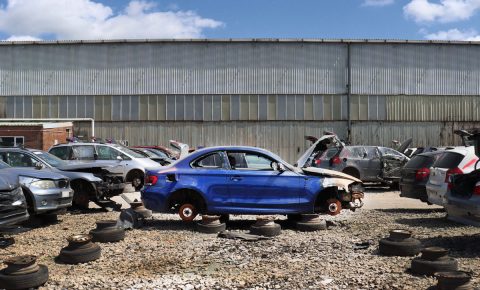
Vauxhall is another brand regularly found in U-Pull-It yards, alongside popular manufacturers such as Ford, Audi and Volkswagen.
Newer Vauxhall models form part of the wider Stellantis family, which also includes Peugeot, Citroën, Opel and DS.
The modern Vauxhall Corsa and Peugeot 208, for example, have both been produced using Stellantis’ Common Modular Platform. This means some mechanical, electrical and supporting components may be used across related models.
Vehicle age is particularly important here. Older Vauxhall models were developed before the brand became part of the current Stellantis group, so the same relationships will not apply to every generation.
Which car parts are most likely to be shared?
Components that may be used across several models include:
Visible body parts such as bonnets, bumpers and doors are more likely to be specific to an individual model.
Parts can also vary within the same model. A facelift, different engine or production change may introduce new plugs, brackets, software or dimensions. Two components can look almost identical without being interchangeable.
How to check whether a used part will fit
The safest approach is to identify the exact component before visiting the scrap yard.
Find the OEM part number
The original equipment manufacturer number may be printed on a label, stamped into the component or moulded into its casing.
Compare the complete number, including any letters or digits at the end. A nearly identical number may refer to a revised or incompatible version.
Not sure what these terms mean? Read our guide to the difference between OE, OEM and aftermarket parts.
Record your vehicle details
Depending on the component, you may need to know:
The model name alone is not always enough to confirm compatibility. While at the scrap yard, compare the connections and mounting points.
Check the:
Taking photographs and measurements of your original component can make comparison easier when you visit the yard.
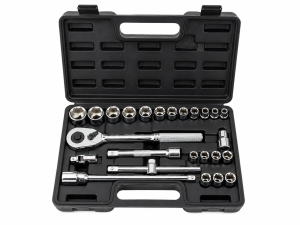
You can also read our guide to preparing for your first U-Pull-It visit, including what tools to bring and how the yards work.
Some electronic modules may also need to be programmed or paired with the vehicle. Braking, steering, airbag and other safety-related components should be checked by someone with the appropriate knowledge before installation.
Widen your search before visiting U-Pull-It
Before searching U-Pull-It stock, research whether the component was fitted to any related models.
Instead of looking only for an identical car, you may be able to create a short list of potential donor vehicles.
Bring the following information with you:
U-Pull-It stock changes regularly as vehicles arrive and parts are removed, so check the latest listings before travelling to the Edinburgh or York yard.
The right part may be fitted to a vehicle you would never normally have searched for. Start with the part number, use related models to widen your options and confirm compatibility before you pull.