

If your car feels a bit rough at idle, takes longer to pick up speed, or is harder to start, spark plugs are among the first service items people think of replacing in a petrol engine.
The reassuring bit: on many cars, changing spark plugs can be a relatively simple DIY job you can do at home. In many cases, you just need the correct plugs, a couple of basic tools, and a careful approach – because most problems come from rushing, using the wrong parts, or over-tightening.
This guide is written around the questions people actually search for, with clear steps and the main mistakes to avoid.
A spark plug creates the spark that ignites the air and fuel mixture inside a petrol engine. That combustion is what helps power the car. If a spark plug is worn, dirty, or failing, the engine may misfire, feel rough, struggle to start, or lose performance.
Yes, often you can.
If you can open the bonnet and clearly see the ignition coils (or plug leads) without removing lots of other parts, it’s usually within reach for a careful beginner.
DIY becomes more difficult when:
If access looks awkward, it’s worth checking a quick guide for your engine layout before you start, so you’re not halfway in and stuck. Otherwise, it’s best to ask a professional to take a look for you.
It can be, but the risks are mostly avoidable.
The main risk is damaging the threads in the cylinder head (many are aluminium). This usually happens when a plug is cross-threaded, over-tightened, or seized.
Work on a cold engine, start the new plugs by hand, and tighten to the correct torque – and you remove most of the risk.
Sometimes it’s a simple 30–60 minute job. Sometimes it’s a frustrating afternoon.
Getting access depends on how easy it is to reach the plugs, the engine layout, and the condition of the plugs. If the engine is fairly roomy, you should be able to get your hands in to tighten the plugs. If it’s cramped, things might be a bit trickier.
If you can reach the plugs easily and you have the right socket and extensions, it’s rarely a “big” job – it’s more a “take your time” job.
Worn or failing spark plugs can cause rough idle (shaky engine when stopped), hesitation or jerking when accelerating, hard starting or just generally sluggish performance. You’ll also notice poorer fuel economy as well.
It’s worth knowing these symptoms can also be caused by ignition coils, plug leads, fuel issues, or sensors. Spark plugs are common, but not the only possible cause.
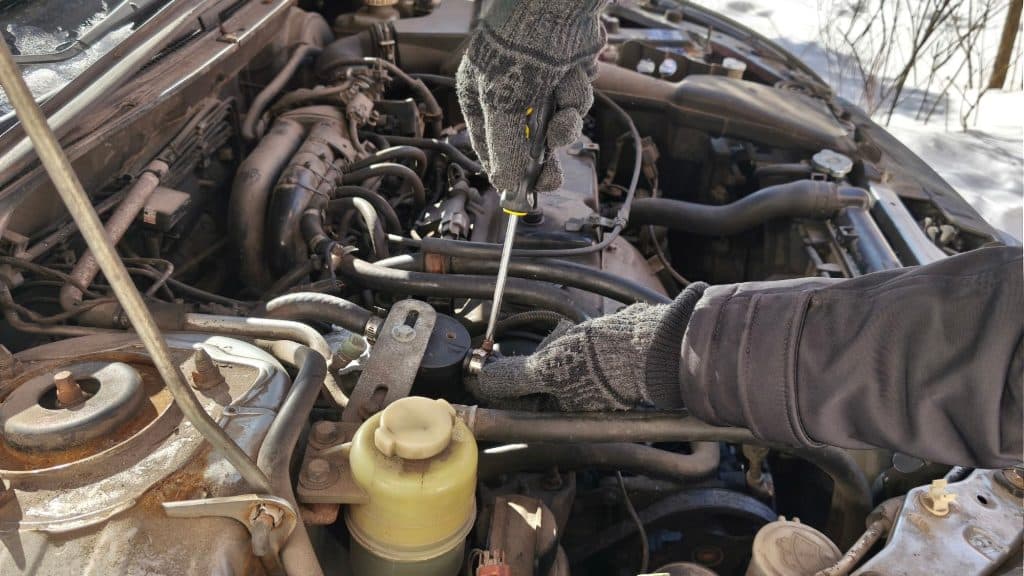
Usually, yes – but nothing exotic.
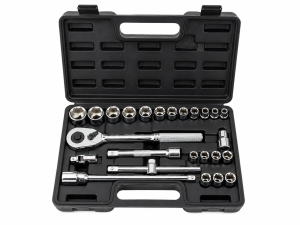
You’ll typically need:
A normal socket can slip or fail to hold the plug securely, which is how people crack insulators or round things off.
Certain brands (especially their newer models) often require even more specialised tools in order to change the spark plugs, so make sure you look up your specific make and model of vehicle before you start.
First, let’s talk about buying spark plugs. Spark plugs aren’t interchangeable. The safest route is matching the exact spec for your engine using your handbook/service info or a reputable parts lookup.
1) Let the engine go fully cold
This isn’t 100% necessary, but we recommend it just for safety. Removing plugs hot increases the chance of thread damage, but some say that the heat helps you remove the spark plugs due to the metal becoming more flexible.
2) Remove the engine cover (if fitted)
Many plastic covers lift off or are held on with a few bolts.
3) Find the coils or plug leads
You’ll usually see either:
Take a quick photo before you unplug anything. It’s a small thing that saves mistakes.
4) Clean around the plug holes
Brush or blow away grit and dust so it doesn’t fall into the plug hole when you remove the plug.
5) Remove one plug at a time
This reduces the chance of mixing parts up.
If you have ignition coils:
If you have plug leads:
6) Remove the old spark plug
Use the spark plug socket and extension by loosening anti-clockwise.
If it feels very tight, don’t force it.
If a plug feels seized, that’s a sensible point to consider getting a garage to handle it, because forcing it can cause real damage.
7) Fit the new plug
This is where you prevent cross-threading.
It should turn smoothly with little resistance.
Once it’s finger-tight, tighten to the correct torque for your engine. If you’re not sure about the correct torque, you can often find it online.
8) Refit coils/leads and reconnect everything
Push coils/boots down until they feel properly seated. Refit any bolts and reconnect plugs until they click.
9) Start the engine and listen
A smooth idle is what you want.
If it misfires or runs rough straight away, switch off the engine, re-check the connectors and coil seating and make sure everything is plugged in.
If you only remember one section, make it this one:
Spark plugs usually last a long time, so early failure can point to another issue.
Common causes include:
If you’re changing plugs far more often than expected, it’s worth looking into the cause, not just swapping plugs again.
If you’re planning to change your spark plugs, start by checking access under the bonnet and making sure you’ve got the exact correct plugs, a spark plug socket, and some extension bars before you begin.
And if you find a cracked coil, damaged plug lead, or missing engine trims while you’re in there, U-Pull-It can be a practical way to source used parts without paying brand-new prices – just check availability for your vehicle before you travel.
If you enjoyed this article, you might like:
How To Replace a Car Air Filter – Basic Car Maintenance