
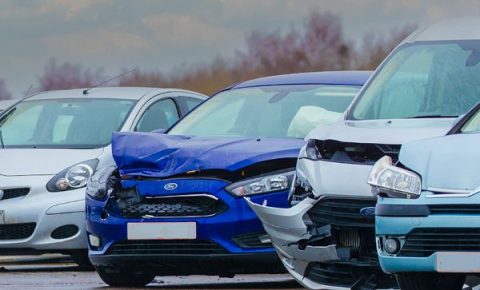
Being told your car has been “written off” can sound very final.
If you’ve owned it for years, know its history and are happy with it, you might assume that means it has reached the end of the road.
Not necessarily.
A car can be uneconomical for an insurer to repair without being impossible to repair. In some cases, if the vehicle can legally return to the road and the problem has been properly diagnosed, sourcing suitable used parts could make repairing it more realistic.
What happens when a car is written off?
When an insurer writes a car off, it does not always mean the damage is beyond repair.
The decision is partly financial. If the estimated repair cost is too high compared with the car’s value, the insurer may decide that repairing it does not make economic sense.
That can happen surprisingly quickly with older cars.
A vehicle worth a few thousand pounds may need replacement parts, labour, paintwork, diagnostics or electrical repairs after an accident. None of those issues necessarily means the car is beyond saving, but together they can push the estimated repair bill beyond what the insurer considers worthwhile.
So “uneconomical to repair” is not always the same as “cannot be repaired”.
Why are older cars written off more easily?
An older car usually has a lower market value, which leaves less room for a large repair bill.
For example, a damaged bumper, wing and headlight might not look particularly serious. But once new parts, paint and professional labour are included, the cost can quickly add up.
The same damage on a newer, more valuable car might still be worth repairing.
This is why a car that has been reliable for years can suddenly be classed as a write-off after what seems like relatively modest damage.
Your car may be worth more to you than it is on paper
Market value is only one way of looking at a car.
You may know its service history, how it drives and what work has already been done to it. You might simply like the car and prefer keeping it to taking a chance on another used vehicle.
That means your decision can be different from the insurer’s.
The insurer is deciding whether the repair makes financial sense as part of the claim. You are deciding whether repairing a car you already know and want to keep makes sense for you.
Does a written-off car have to be crushed?
No, although the write-off category matters.
There are four current categories:
Category S and N vehicles can return to the road once they have been properly repaired to a roadworthy condition.
So “written off” does not automatically mean “ready for the crusher”.
We have a separate guide to car insurance write-off categories if you want a fuller explanation of what each one means.
What if I want to keep my car?
For a repairable Category S or N vehicle, the next step is understanding what has actually been damaged.
Sometimes that is obvious. In other cases, visible damage can hide other problems, or a warning light can have several possible causes.
Once the fault or damaged component has been identified, it becomes easier to work out whether repairing the car still feels worthwhile.
If structural work, brakes, steering, airbags or other safety-related systems are involved, professional advice can help give you a clearer picture of what the repair will involve.
Could used parts make the repair more affordable?
This is where your repair costs may look different from the original insurance estimate.
Brand-new replacement parts are not always the only option. If the correct part has been identified, suitable used car parts from another vehicle may help bring the cost down.
That can be particularly useful with older cars, where the price of a new replacement part can be difficult to justify.
Depending on the repair, that could mean finding a used light, door, wing, trim piece or mechanical component instead.
The important considerations are still compatibility and condition. A used part needs to be suitable for the car and the job it is being used for.
Finding used parts at U-Pull-It
U-Pull-It allows customers to find and remove used parts from breaker vehicles themselves.
Current vehicle stock can be checked for the York and Edinburgh yards before visiting. Once a suitable donor vehicle is found, the part can be removed and paid for at the service counter.
It helps to know as much as possible about the part beforehand. Make, model, year, engine, specification and part numbers can all be useful, as cars that look very similar can still use different components.
Because the parts are used, their condition is also worth considering before fitting them.
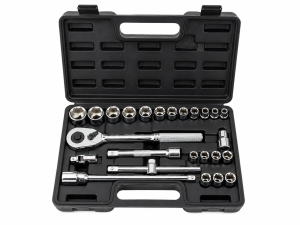
U-Pull-It is self-service, so most parts are removed by the customer. Hand tools and battery-powered tools can be brought into the yard, although some restrictions apply. Engines and gearboxes are removed by U-Pull-It staff for safety reasons.
When repairing the car still may not make sense
Not every written-off car is worth saving.
Category A and B vehicles cannot return to the road, and even repairable Category S or N cars can sometimes need more work than expected.
Used parts may reduce part of the cost, but labour, paint, diagnostics and additional damage can still affect the overall bill.
Sometimes saying goodbye will still be the sensible choice.
But the important thing is that “uneconomical to repair” does not automatically mean “impossible to repair”.
Frequently asked questions
Does uneconomical to repair mean the car cannot be fixed?
No. It can simply mean the estimated repair cost is too high compared with the car’s value.
Does a written-off car have to be scrapped?
Not always. Category S and N vehicles can be repaired and returned to the road if they are made roadworthy.
Why are older cars written off after relatively minor damage?
Because their market value is lower, even a fairly ordinary repair bill can become uneconomical from an insurer’s point of view.
Can used parts be used to repair a written-off car?
Suitable used parts can potentially form part of the repair, provided they are compatible and in suitable condition.
How do I know which used part will fit my car?
Make, model, year, engine and specification can all affect compatibility. Part numbers can also help identify the correct component.
Before you say goodbye to your car
A write-off can feel like the decision has already been made.
But if the vehicle is repairable, you know what needs fixing and you would genuinely rather keep the car you already know, there may still be options.
Checking U-Pull-It’s current breaker vehicles could help you find a suitable used part and make keeping your car on the road more realistic.
If you already know what part you need, you can check U-Pull-It’s current breaker vehicle stock to see what’s available.
Increment bidding allows Copart to increase your entered bid by one and only one increment in the event your entered bid is tied by a live virtual bidder. If your bid is the highest bid, then your bid will NOT be incremented. Our increments are based on the following table:
| Bid Range £ | Increment £ |
|---|---|
| 0 – 10 | 1 |
| 10 – 50 | 5 |
| 50 – 100 | 10 |
| 100 – 1,000 | 25 |
| 1,000 – 5,000 | 50 |
| 5,000 – 25,000 | 100 |
| 25,000 – 9,940,000 | 250 |
| 9,940,000 – 9,999,999.99 | 1000 |
Example 1: You checked the increment bid box and bid £ 15,000. Live auction bid is currently at £ 15,000 (a tie with your bid – unfortunately, it happens). Your internet bid is placed next at £ 15,100 (because you checked the increment bid box). The car sells to you at no more than £ 15,100 or to live auction bidder for £ 15,200 or more.
| Cookie | Duration | Description |
|---|---|---|
| __cf_bm | 1 hour | This cookie, set by Cloudflare, is used to support Cloudflare Bot Management. |
| cookielawinfo-checkbox-advertisement | 1 year | Set by the GDPR Cookie Consent plugin, this cookie records the user consent for the cookies in the "Advertisement" category. |
| cookielawinfo-checkbox-analytics | 11 months | This cookie is set by GDPR Cookie Consent plugin. The cookie is used to store the user consent for the cookies in the category "Analytics". |
| cookielawinfo-checkbox-functional | 11 months | The cookie is set by GDPR cookie consent to record the user consent for the cookies in the category "Functional". |
| cookielawinfo-checkbox-necessary | 11 months | This cookie is set by GDPR Cookie Consent plugin. The cookies is used to store the user consent for the cookies in the category "Necessary". |
| cookielawinfo-checkbox-others | 11 months | This cookie is set by GDPR Cookie Consent plugin. The cookie is used to store the user consent for the cookies in the category "Other. |
| cookielawinfo-checkbox-performance | 11 months | This cookie is set by GDPR Cookie Consent plugin. The cookie is used to store the user consent for the cookies in the category "Performance". |
| CookieLawInfoConsent | 1 year | CookieYes sets this cookie to record the default button state of the corresponding category and the status of CCPA. It works only in coordination with the primary cookie. |
| elementor | never | The website's WordPress theme uses this cookie. It allows the website owner to implement or change the website's content in real-time. |
| incap_ses_* | session | This is an Incapsula DDoS Protection and Web Application Firewall cookie that is used to relate HTTP requests to a certain session. |
| PHPSESSID | session | This cookie is native to PHP applications. The cookie stores and identifies a user's unique session ID to manage user sessions on the website. The cookie is a session cookie and will be deleted when all the browser windows are closed. |
| viewed_cookie_policy | 11 months | The cookie is set by the GDPR Cookie Consent plugin and is used to store whether or not user has consented to the use of cookies. It does not store any personal data. |
| visid_incap_* | 1 year | Incapsula sets this cookie to provide cloud-based website security services. |
| Cookie | Duration | Description |
|---|---|---|
| mailchimp_landing_site | 1 month | MailChimp sets the cookie to record which page the user first visited. |
| Cookie | Duration | Description |
|---|---|---|
| ___utmvc | less than a minute | The ___utmvc cookie is installed by Google Analytics to gather data on the user's site usage. This data is then used to compile reports and improve the site. |
| _ga | 1 year 1 month 4 days | Google Analytics sets this cookie to calculate visitor, session and campaign data and track site usage for the site's analytics report. The cookie stores information anonymously and assigns a randomly generated number to recognise unique visitors. |
| _ga_* | 1 year 1 month 4 days | Google Analytics sets this cookie to store and count page views. |
| _gat_gtag_UA_* | 1 minute | Google Analytics sets this cookie to store a unique user ID. |
| _gid | 1 day | Google Analytics sets this cookie to store information on how visitors use a website while also creating an analytics report of the website's performance. Some of the collected data includes the number of visitors, their source, and the pages they visit anonymously. |
| _hjSession_* | 1 hour | Hotjar sets this cookie to ensure data from subsequent visits to the same site is attributed to the same user ID, which persists in the Hotjar User ID, which is unique to that site. |
| _hjSessionUser_* | 1 year | Hotjar sets this cookie to ensure data from subsequent visits to the same site is attributed to the same user ID, which persists in the Hotjar User ID, which is unique to that site. |
| sbjs_current | session | Sourcebuster sets this cookie to identify the source of a visit and stores user action information in cookies. This analytical and behavioural cookie is used to enhance the visitor experience on the website. |
| sbjs_current_add | session | Sourcebuster sets this cookie to identify the source of a visit and stores user action information in cookies. This analytical and behavioural cookie is used to enhance the visitor experience on the website. |
| sbjs_first | session | Sourcebuster sets this cookie to identify the source of a visit and stores user action information in cookies. This analytical and behavioural cookie is used to enhance the visitor experience on the website. |
| sbjs_first_add | session | Sourcebuster sets this cookie to identify the source of a visit and stores user action information in cookies. This analytical and behavioural cookie is used to enhance the visitor experience on the website. |
| sbjs_migrations | session | Sourcebuster sets this cookie to identify the source of a visit and stores user action information in cookies. This analytical and behavioural cookie is used to enhance the visitor experience on the website. |
| sbjs_session | 1 hour | Sourcebuster sets this cookie to identify the source of a visit and stores user action information in cookies. This analytical and behavioural cookie is used to enhance the visitor experience on the website. |
| sbjs_udata | session | Sourcebuster sets this cookie to identify the source of a visit and stores user action information in cookies. This analytical and behavioural cookie is used to enhance the visitor experience on the website. |
| vuid | 1 year 1 month 4 days | Vimeo installs this cookie to collect tracking information by setting a unique ID to embed videos on the website. |
| Cookie | Duration | Description |
|---|---|---|
| _fbp | 3 months | Facebook sets this cookie to display advertisements when either on Facebook or on a digital platform powered by Facebook advertising after visiting the website. |
| test_cookie | 15 minutes | doubleclick.net sets this cookie to determine if the user's browser supports cookies. |
| VISITOR_INFO1_LIVE | 6 months | YouTube sets this cookie to measure bandwidth, determining whether the user gets the new or old player interface. |
| VISITOR_PRIVACY_METADATA | 6 months | YouTube sets this cookie to store the user's cookie consent state for the current domain. |
| YSC | session | Youtube sets this cookie to track the views of embedded videos on Youtube pages. |
| yt-remote-connected-devices | never | YouTube sets this cookie to store the user's video preferences using embedded YouTube videos. |
| yt-remote-device-id | never | YouTube sets this cookie to store the user's video preferences using embedded YouTube videos. |
| yt.innertube::nextId | never | YouTube sets this cookie to register a unique ID to store data on what videos from YouTube the user has seen. |
| yt.innertube::requests | never | YouTube sets this cookie to register a unique ID to store data on what videos from YouTube the user has seen. |
| Cookie | Duration | Description |
|---|---|---|
| cookies.js | session | No description available. |
| elementor_split_test_client_id | 1 year | No description available. |