
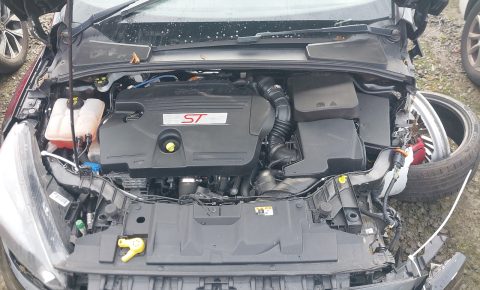
Used car parts can cost less than new replacements, particularly when the component is durable, easy to inspect and expensive to buy new. But cheap car parts are not automatically good value. The sensible choice depends on what the part does, how it wears and whether you can check its condition and compatibility before fitting it.
As a rule, used parts make the most sense when they are durable, easy to inspect and costly to buy new. New parts are usually the better choice when they are designed to wear out, seal only once or protect you in a crash. For the broader cost, availability and reuse case, read why buy used car parts instead of new.
Reusing a serviceable component can also keep an existing part in use. For the wider reuse context, see what green car parts are.
Parts that are often worth buying used
These parts can be good used buys, provided the specification matches and there is no damage that affects how they work.
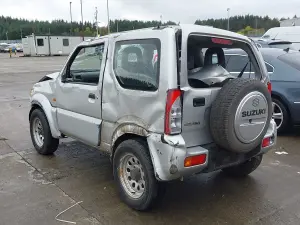
Body panels
Doors, bonnets, wings, boot lids and bumpers can be expensive new, especially once paint and delivery are included. A used panel in the correct colour may reduce the work needed, although paint shades can differ with age and sun exposure.
Check the mounting points, edges and seams for distortion, corrosion and previous repairs. For doors and tailgates, confirm whether glass, locks, wiring or trim are included before comparing the total cost.
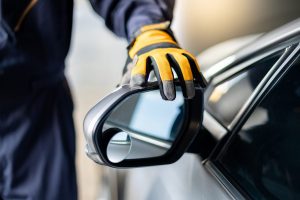
Wing mirrors
A complete used mirror can be particularly useful because the housing, glass, motor, heater and indicator may be combined in one assembly. The catch is specification. Two mirrors that look identical can have different connectors or functions.
Match the part number where possible and check whether your car has heating, power folding, memory, blind-spot monitoring or an indicator in the housing.
Headlights and rear lights
Used lamp units can be a sensible alternative to a costly new assembly. Look for cracked lenses, broken mounting tabs, moisture inside the unit and damaged connectors. Modern LED or xenon units may also use separate control modules, so establish exactly what is included.
Interior trim and controls
Door cards, centre-console trim, vents, parcel shelves, switches and storage pieces are often good candidates for reuse. They normally fail through visible damage rather than a hidden service-life limit.
Compare colour, finish, shape and connector design. Model-year changes and optional equipment can make a near match the wrong part.
Seats and non-deployed interior parts
A used seat can solve torn upholstery, collapsed foam or a broken adjustment mechanism, but it needs more checking than a simple trim panel. Inspect the frame, runners, adjusters and mounting points. If the seat contains an airbag, occupancy sensor, heating or electric adjustment, confirm compatibility and use a suitably qualified fitter where the restraint system is involved.
Alloy wheels
A matching used alloy can be useful when one wheel is badly kerbed or damaged and a full new set would be wasteful. Check the diameter, width, offset, bolt pattern and centre bore, not just the design. Avoid wheels with visible cracks, serious distortion or questionable repairs. If in doubt, ask a wheel specialist to inspect it before fitting a tyre.
Some electrical and mechanical assemblies
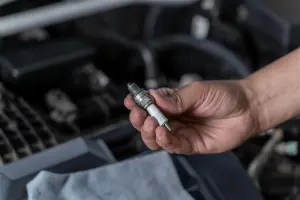
Items such as window regulators, starter motors, alternators and some control switches may be worth considering used when the part can be identified correctly and the saving justifies the fitting work. Their remaining life is not visible, so factor in access, labour and the consequences of having to replace the part again.
For an awkward job, a new or professionally remanufactured unit with clearer warranty cover may offer better overall value even if the purchase price is higher. If you are comparing the source and specification of different replacements, the OE, OEM and aftermarket parts guide explains the terminology.
Parts that are usually better bought new
The list below is less about the size of the part and more about known service life. A cheap used consumable can become expensive once you pay to fit it twice.
Filters, fluids, wiper blades and ordinary service items
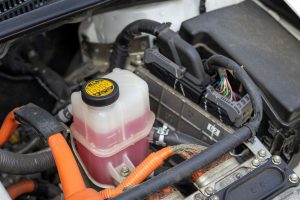
Oil, air, fuel and cabin filters are designed to collect contamination. Wiper blades wear against the glass, while fluids degrade or become contaminated. Start with new service items of the correct specification rather than trying to reuse them.
Belts, hoses, seals and gaskets
Rubber hardens and cracks with age and heat. Gaskets and many seals deform when installed. Because hidden ageing can be difficult to judge and failure can undo the repair, new replacements are normally the sensible choice.
Brake friction parts
Brake pads and shoes wear to match the surfaces they run against. Reusing partly worn friction material gives you an uncertain amount of life and can create an uneven setup. Buy the correct new components and follow the vehicle manufacturer’s repair information. Brake work should be carried out by someone with the right competence.
Timing belts and other scheduled replacement parts
A timing belt has a manufacturer-defined replacement interval and its history matters. A used belt offers no reliable reset point, so fit a new belt and the associated components specified for the job. The same logic applies to other parts replaced on a service schedule.
Airbags, pretensioners and crash-safety components
Restraint-system parts are safety-critical and may store pyrotechnic charges. Compatibility, storage, transport, programming and installation all matter. Do not treat them as a casual self-service purchase. Use an appropriate specialist and follow the vehicle manufacturer’s repair procedure.
Tyres need a separate decision
A part-worn tyre is not automatically unsafe, but it must meet UK rules before it is supplied. Those rules cover condition, tread, inflation testing and permanent “PART-WORN” marking. A tyre can also have age, repair or internal-damage concerns that are not answered by tread depth alone.
That makes tyres different from a door or piece of trim. Buy only through a route that properly inspects and supplies part-worn tyres, and have the tyre checked and fitted by a competent tyre professional. If condition or history is uncertain, buy new.
How to decide before you travel
A used part is only a saving if it fits and the total job still makes sense. Before visiting a breaker yard:
The short answer
Used body panels, mirrors, lamp units, interior trim, alloy wheels and selected assemblies can offer good value when you can confirm fit and condition. New is normally the better choice for consumables, scheduled replacement items, one-use seals and parts whose unknown wear or crash history creates an avoidable risk.
The best question is not “Can I buy this used?” It is “Can I verify this part, and does buying it used still make sense once the whole repair is considered?”
Ready to look for a suitable donor vehicle? Search U-Pull-It stockand check the current breaker parts guidance before visiting.
Increment bidding allows Copart to increase your entered bid by one and only one increment in the event your entered bid is tied by a live virtual bidder. If your bid is the highest bid, then your bid will NOT be incremented. Our increments are based on the following table:
| Bid Range £ | Increment £ |
|---|---|
| 0 – 10 | 1 |
| 10 – 50 | 5 |
| 50 – 100 | 10 |
| 100 – 1,000 | 25 |
| 1,000 – 5,000 | 50 |
| 5,000 – 25,000 | 100 |
| 25,000 – 9,940,000 | 250 |
| 9,940,000 – 9,999,999.99 | 1000 |
Example 1: You checked the increment bid box and bid £ 15,000. Live auction bid is currently at £ 15,000 (a tie with your bid – unfortunately, it happens). Your internet bid is placed next at £ 15,100 (because you checked the increment bid box). The car sells to you at no more than £ 15,100 or to live auction bidder for £ 15,200 or more.
| Cookie | Duration | Description |
|---|---|---|
| __cf_bm | 1 hour | This cookie, set by Cloudflare, is used to support Cloudflare Bot Management. |
| cookielawinfo-checkbox-advertisement | 1 year | Set by the GDPR Cookie Consent plugin, this cookie records the user consent for the cookies in the "Advertisement" category. |
| cookielawinfo-checkbox-analytics | 11 months | This cookie is set by GDPR Cookie Consent plugin. The cookie is used to store the user consent for the cookies in the category "Analytics". |
| cookielawinfo-checkbox-functional | 11 months | The cookie is set by GDPR cookie consent to record the user consent for the cookies in the category "Functional". |
| cookielawinfo-checkbox-necessary | 11 months | This cookie is set by GDPR Cookie Consent plugin. The cookies is used to store the user consent for the cookies in the category "Necessary". |
| cookielawinfo-checkbox-others | 11 months | This cookie is set by GDPR Cookie Consent plugin. The cookie is used to store the user consent for the cookies in the category "Other. |
| cookielawinfo-checkbox-performance | 11 months | This cookie is set by GDPR Cookie Consent plugin. The cookie is used to store the user consent for the cookies in the category "Performance". |
| CookieLawInfoConsent | 1 year | CookieYes sets this cookie to record the default button state of the corresponding category and the status of CCPA. It works only in coordination with the primary cookie. |
| elementor | never | The website's WordPress theme uses this cookie. It allows the website owner to implement or change the website's content in real-time. |
| incap_ses_* | session | This is an Incapsula DDoS Protection and Web Application Firewall cookie that is used to relate HTTP requests to a certain session. |
| PHPSESSID | session | This cookie is native to PHP applications. The cookie stores and identifies a user's unique session ID to manage user sessions on the website. The cookie is a session cookie and will be deleted when all the browser windows are closed. |
| viewed_cookie_policy | 11 months | The cookie is set by the GDPR Cookie Consent plugin and is used to store whether or not user has consented to the use of cookies. It does not store any personal data. |
| visid_incap_* | 1 year | Incapsula sets this cookie to provide cloud-based website security services. |
| Cookie | Duration | Description |
|---|---|---|
| mailchimp_landing_site | 1 month | MailChimp sets the cookie to record which page the user first visited. |
| Cookie | Duration | Description |
|---|---|---|
| ___utmvc | less than a minute | The ___utmvc cookie is installed by Google Analytics to gather data on the user's site usage. This data is then used to compile reports and improve the site. |
| _ga | 1 year 1 month 4 days | Google Analytics sets this cookie to calculate visitor, session and campaign data and track site usage for the site's analytics report. The cookie stores information anonymously and assigns a randomly generated number to recognise unique visitors. |
| _ga_* | 1 year 1 month 4 days | Google Analytics sets this cookie to store and count page views. |
| _gat_gtag_UA_* | 1 minute | Google Analytics sets this cookie to store a unique user ID. |
| _gid | 1 day | Google Analytics sets this cookie to store information on how visitors use a website while also creating an analytics report of the website's performance. Some of the collected data includes the number of visitors, their source, and the pages they visit anonymously. |
| _hjSession_* | 1 hour | Hotjar sets this cookie to ensure data from subsequent visits to the same site is attributed to the same user ID, which persists in the Hotjar User ID, which is unique to that site. |
| _hjSessionUser_* | 1 year | Hotjar sets this cookie to ensure data from subsequent visits to the same site is attributed to the same user ID, which persists in the Hotjar User ID, which is unique to that site. |
| sbjs_current | session | Sourcebuster sets this cookie to identify the source of a visit and stores user action information in cookies. This analytical and behavioural cookie is used to enhance the visitor experience on the website. |
| sbjs_current_add | session | Sourcebuster sets this cookie to identify the source of a visit and stores user action information in cookies. This analytical and behavioural cookie is used to enhance the visitor experience on the website. |
| sbjs_first | session | Sourcebuster sets this cookie to identify the source of a visit and stores user action information in cookies. This analytical and behavioural cookie is used to enhance the visitor experience on the website. |
| sbjs_first_add | session | Sourcebuster sets this cookie to identify the source of a visit and stores user action information in cookies. This analytical and behavioural cookie is used to enhance the visitor experience on the website. |
| sbjs_migrations | session | Sourcebuster sets this cookie to identify the source of a visit and stores user action information in cookies. This analytical and behavioural cookie is used to enhance the visitor experience on the website. |
| sbjs_session | 1 hour | Sourcebuster sets this cookie to identify the source of a visit and stores user action information in cookies. This analytical and behavioural cookie is used to enhance the visitor experience on the website. |
| sbjs_udata | session | Sourcebuster sets this cookie to identify the source of a visit and stores user action information in cookies. This analytical and behavioural cookie is used to enhance the visitor experience on the website. |
| vuid | 1 year 1 month 4 days | Vimeo installs this cookie to collect tracking information by setting a unique ID to embed videos on the website. |
| Cookie | Duration | Description |
|---|---|---|
| _fbp | 3 months | Facebook sets this cookie to display advertisements when either on Facebook or on a digital platform powered by Facebook advertising after visiting the website. |
| test_cookie | 15 minutes | doubleclick.net sets this cookie to determine if the user's browser supports cookies. |
| VISITOR_INFO1_LIVE | 6 months | YouTube sets this cookie to measure bandwidth, determining whether the user gets the new or old player interface. |
| VISITOR_PRIVACY_METADATA | 6 months | YouTube sets this cookie to store the user's cookie consent state for the current domain. |
| YSC | session | Youtube sets this cookie to track the views of embedded videos on Youtube pages. |
| yt-remote-connected-devices | never | YouTube sets this cookie to store the user's video preferences using embedded YouTube videos. |
| yt-remote-device-id | never | YouTube sets this cookie to store the user's video preferences using embedded YouTube videos. |
| yt.innertube::nextId | never | YouTube sets this cookie to register a unique ID to store data on what videos from YouTube the user has seen. |
| yt.innertube::requests | never | YouTube sets this cookie to register a unique ID to store data on what videos from YouTube the user has seen. |
| Cookie | Duration | Description |
|---|---|---|
| cookies.js | session | No description available. |
| elementor_split_test_client_id | 1 year | No description available. |